
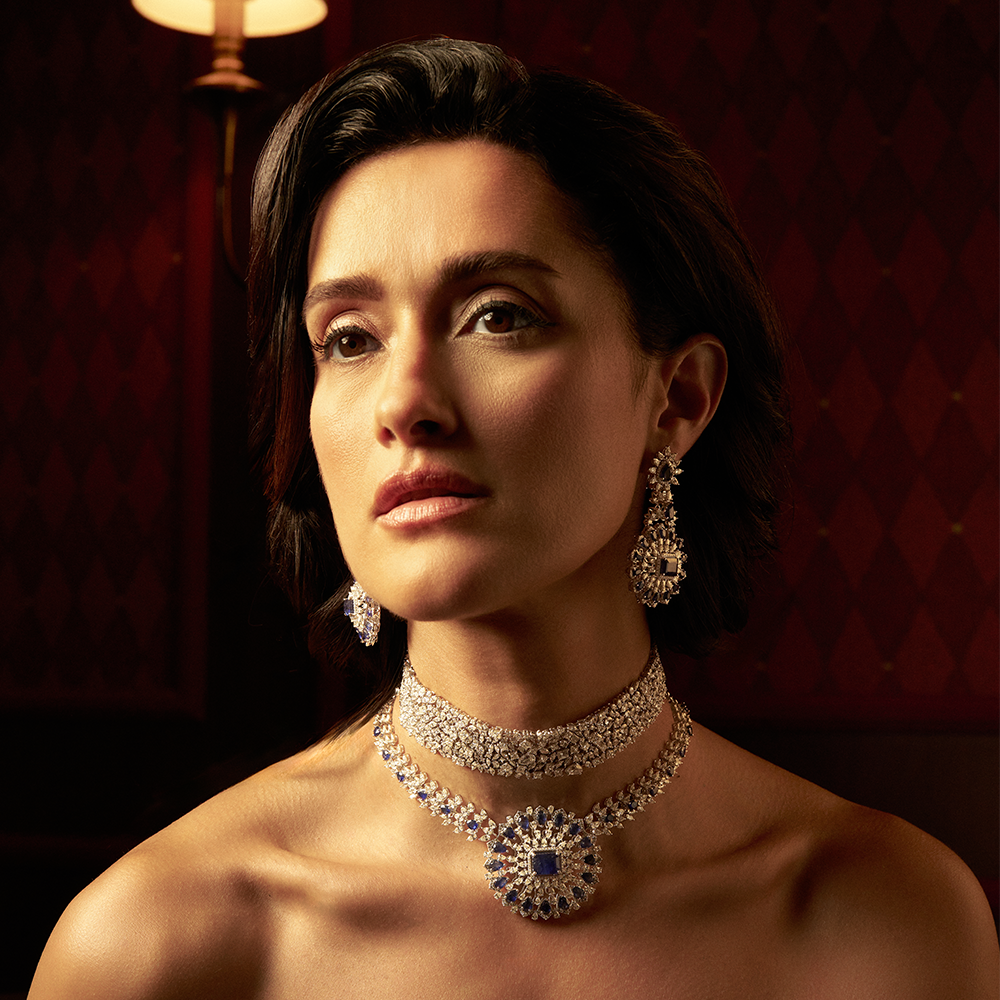
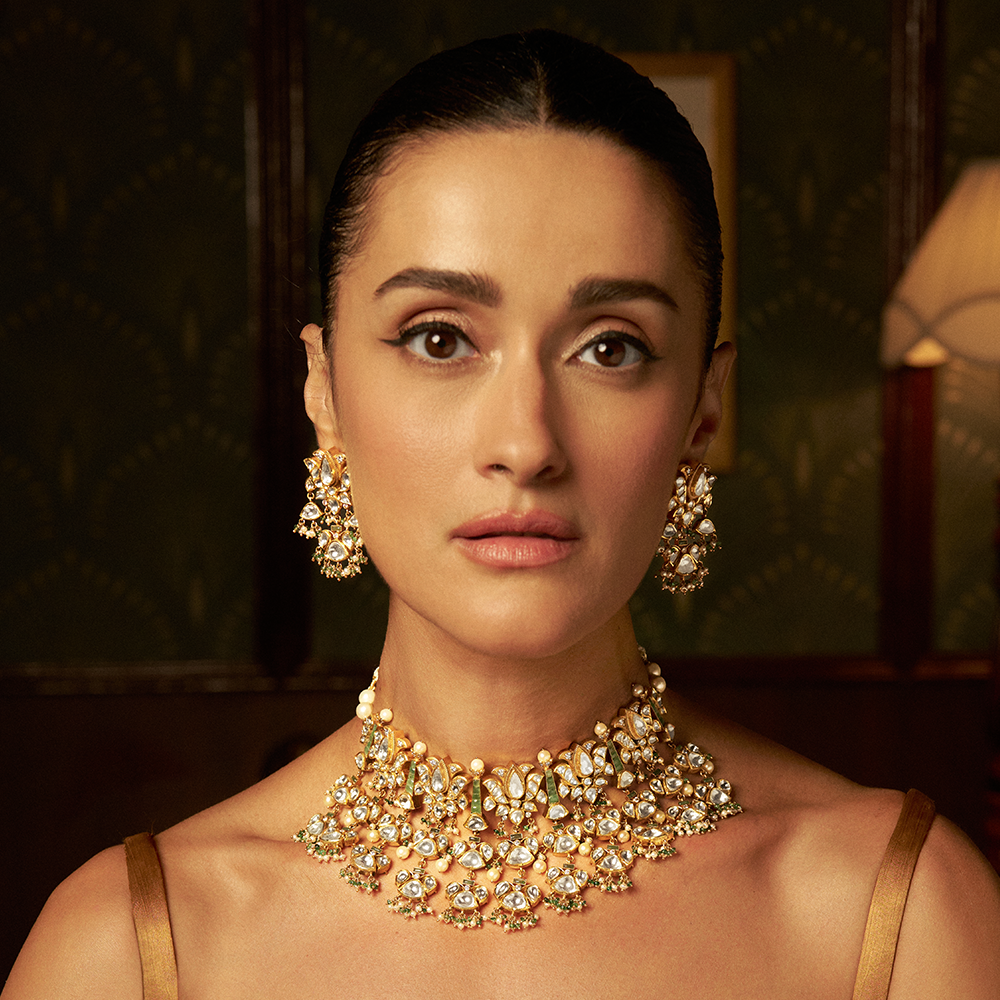
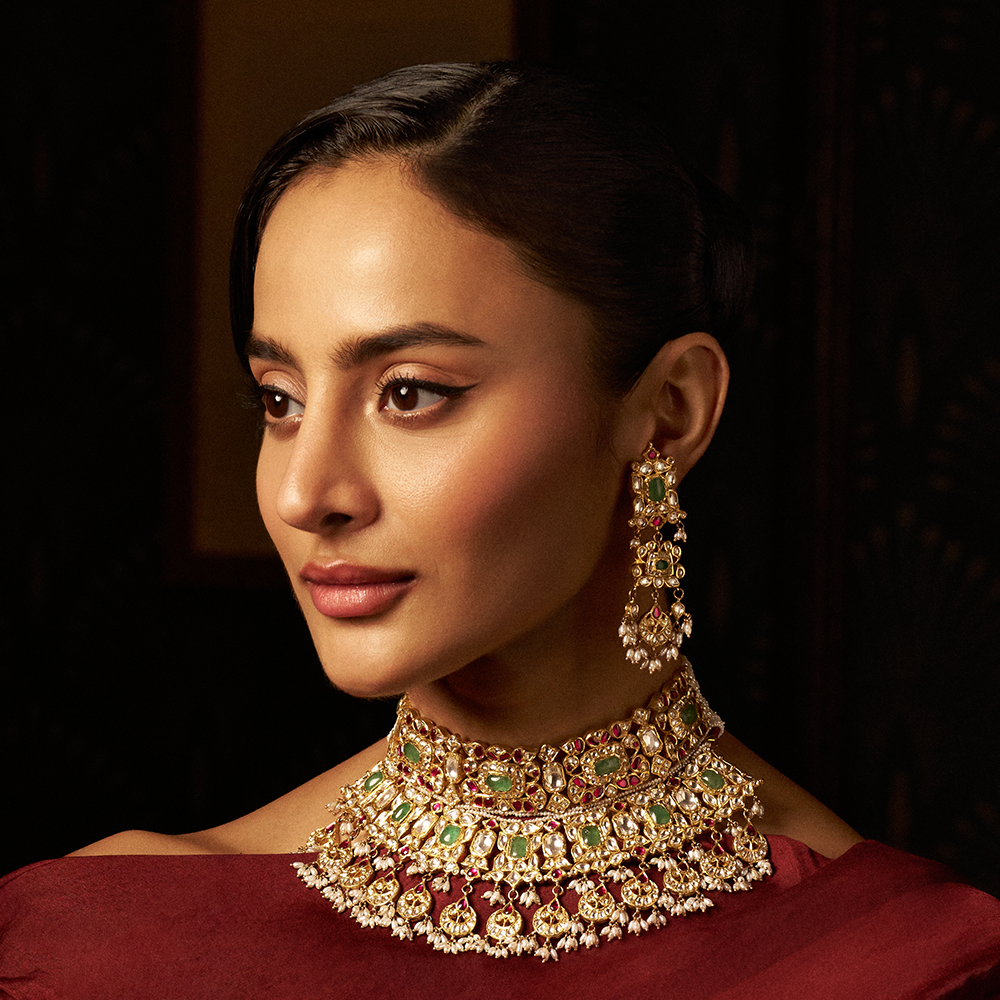
Article: The Complete Bridal Jewellery Guide: How to Choose, Build and Verify Your Wedding Set


The Complete Bridal Jewellery Guide: How to Choose, Build and Verify Your Wedding Set
Key Takeaways
-
Bridal jewellery is a wardrobe, not one set: most brides need distinct looks for the wedding, reception, and pre-wedding functions, each differing in weight and formality.
-
Choose your necklace based on your neckline: a high or closed neck suits a long necklace, while an open or sweetheart neck suits a choker or short piece.
-
Polki, Kundan, and Jadau are different things: Polki is the uncut natural diamond, Kundan is the gold-foil setting technique, and Jadau is the overarching embedding craft.
-
Polki costs several times more than Kundan because it uses real natural diamonds and carries diamond-level heirloom and resale value.
-
Every hallmarked gold piece carries a six-digit alphanumeric HUID code that any buyer can verify in the BIS CARE app in under a minute, though Kundan, Polki and Jadau pieces are formally exempt from mandatory hallmarking.
-
Gold purity is stamped as fineness: 916 means 22-karat (91.6% pure), 750 means 18-karat (75%), and 585 means 14-karat (58.5%).
-
Higher-karat gold is softer, so traditional sets use 22K, while diamond and Polki pieces use 18K or 14K for the strength to hold stones. Nowadays, even 9K has been approved by BIS and is used in lightweight diamond jewellery.
-
For any diamond piece, cut matters most among the 4Cs; a well-cut stone outshines a larger, poorly cut one at the same budget.
Most bridal jewellery advice starts in the wrong place. It opens with a list of ornaments and their names, when the real question a bride is asking is different: what do I actually need, in what order, and how do I know I'm not overpaying?
This guide is built around that question. It treats bridal jewellery the way an experienced jeweller does at the counter: as a set of decisions rather than a shopping list. You'll learn how to assemble a bridal wardrobe function by function (not everything belongs on the wedding day itself), how the neckline of your outfit quietly decides which necklace works, and how to tell apart the three terms that cause the most confusion and the most overpaying in Indian bridal buying: Kundan, Polki, and Jadau.
By the end, you should be able to walk into any showroom, read a hallmark in thirty seconds, ask the two questions that separate a genuine Polki piece from a look-alike, and build a set that photographs beautifully and holds its value.
Start With the Wedding, Not the Jewellery
The most useful shift a bride can make is to stop shopping for "a bridal set" and start planning for a series of appearances. A North Indian wedding is rarely one event. Between the engagement, mehndi and sangeet, the wedding ceremony itself, and the reception, a bride typically appears in three to five distinct looks, and jewellery that anchors the wedding day will often overwhelm the sangeet, while reception jewellery may look under-dressed beside the bridal lehenga.
Planning by function does three things at once. It prevents the common mistake of buying one very heavy set and nothing else. It spreads the budget across pieces you'll genuinely re-wear. And it lets each look breathe; the wedding-day set can be the boldest thing you own precisely because the other functions are dressed more lightly.
Jewellery for Every Wedding Function
|
Function |
Typical mood |
What usually works |
What to avoid |
|
Engagement / roka |
Refined, photographed close-up |
A statement ring, delicate necklace, subtle earrings |
Full bridal weight; it dwarfs an intimate event |
|
Mehndi/haldi |
Relaxed, colourful, daytime |
Light florals, Meenakari, coloured-stone pieces, minimal gold |
Heavy sets that restrict movement |
|
Sangeet |
Festive, high-energy, evening |
Mid-weight statement earrings or a choker; movement-friendly |
Anything that competes with the wedding-day look |
|
Wedding ceremony |
The fullest, most traditional look |
Layered necklaces, maang tikka, chooda and kaleere, nath, full set |
Under-dressing: this is the one day to go all out |
|
Reception |
Polished, contemporary, glamorous |
Diamonds, Polki, a single strong statement piece |
Repeating the exact wedding set |
A practical rule: decide the wedding-ceremony look first, because it's the anchor and usually the largest spend, then build the lighter functions around it so nothing clashes or repeats.
Punjabi and North Indian Bridal Essentials

North Indian bridal adornment has a vocabulary of its own, and much of it traces back to the idea of solah shringar, the sixteen traditional adornments believed to complete a bride's appearance, a framework that still shapes the classic North Indian look. Punjabi weddings, in particular, layer symbolic pieces onto the fine jewellery, and knowing what each is and whether it's ornamental or ceremonial helps you decide where to invest and where tradition already dictates the piece.
Here is the core North Indian and Punjabi bridal vocabulary, grouped by where it sits on the body:
On the head and face
-
Maang tikka: a pendant that sits at the hairline centre-parting; often the first piece a bride chooses because it frames the face in every photograph.
-
Matha patti: an extended headpiece running across the forehead, adding symmetry and a more regal, layered effect
-
Nath: the nose ring, frequently linked by a fine chain to the hair; sized to the bride's face and the boldness of the look.
-
Passa / jhoomar: a side headpiece pinned above the ear, a nod to Mughal-era court styling.
At the neck
-
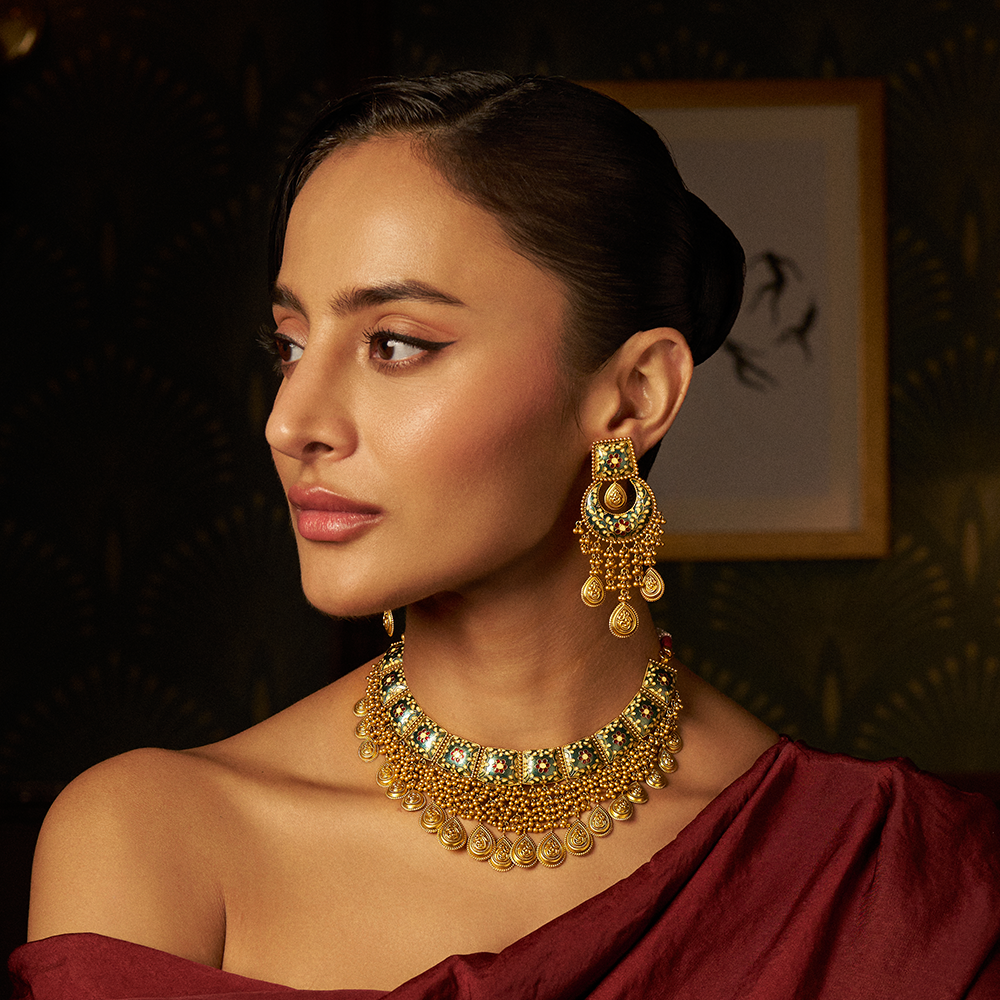
Choker: a short necklace sitting high on the throat; the workhorse of a layered bridal neckline.
-
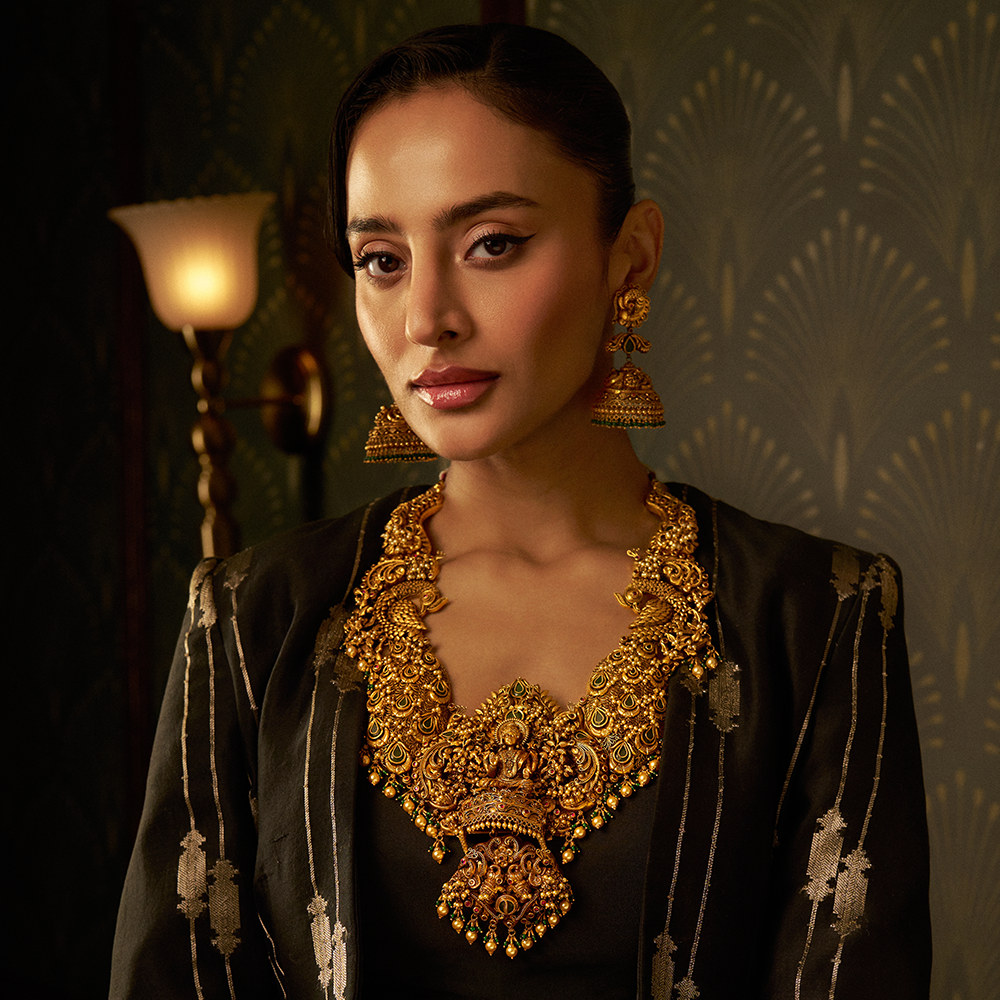
Rani haar: the long, elaborate necklace historically associated with royalty; worn below the choker to build the layered "long-and-short" effect.
On the arms and hands
-
Chooda: the set of red and ivory bangles central to Punjabi bridal tradition, placed on the bride by maternal relatives in the chooda chadana ceremony on the wedding morning, and traditionally worn for weeks afterward.
-
Kaleere: the ornamental, often umbrella-shaped hangings tied to the chooda by sisters and close friends; in the well-known custom, the bride shakes them over unmarried friends, and whoever a piece falls on is said to marry next.
-
Bajuband (bazuband): the upper-arm ornament
-
Haath phool: the hand harness linking a bracelet to finger rings.
Two of these, the chooda and kaleere, are ceremonial and gifted, not chosen like fine jewellery, so brides do not need to budget for them the way they budget for a necklace set. Everything else is where design and investment decisions actually happen.
Choose by Outfit and Neckline
This is the single most practical section for a bride, and the one most guides skip. Your jewellery doesn't exist in isolation; it has to work with the neckline of your outfit. Get this right, and even a modest set looks intentional; get it wrong, and an expensive necklace fights the blouse instead of completing it.
The governing principle is simple: the necklace should fill the space the neckline leaves open, without overlapping the fabric.
|
Neckline |
What to wear |
Why it works |
|
High/closed neck |
Long necklace worn over the fabric, or skip the necklace and let earrings and maang tikka lead |
A choker disappears against a high neck; length gives the eye somewhere to travel |
|
Sweetheart / open neck |
Short necklace or choker that traces the neckline |
Fills the open space and echoes the outfit's own curve |
|
Deep V / plunging |
A single graduated necklace or a rani haar that follows the V |
Mirrors the line rather than cutting across it |
|
Boat neck |
A layered look: a choker plus a mid-length necklace |
The wide, high line needs a short piece; layering adds depth |
|
Off-shoulder |
Statement earrings and a choker; keep the neck relatively clean |
The shoulders are the feature; over-layering competes with them |
A companion rule for balance: let one zone lead. If the necklace is a large, layered statement, keep earrings and headpiece proportionate rather than equally maximal. If you'd rather the earrings be the hero (a common reception choice), let the necklace step back. Everything competing for attention at once reads as heavy rather than grand.
Kundan, Polki and Jadau: The Distinction That Decides Price
If you learn only one technical thing before shopping, make it this. These three words are used interchangeably in showrooms and even in some advertising, and that confusion is expensive because they describe completely different things.
Here is the clean version, the way craftsmen actually explain it:
-
Polki is a stone: a natural diamond left uncut and unpolished, in its raw crystalline form. It gives a soft, milky, organic sparkle rather than the sharp fire of a modern brilliant-cut diamond.
-
Kundan is a setting technique using strips of highly refined, near-pure gold foil worked cold around a stone to hold it without prongs or solder. In common usage, "Kundan jewellery" most often holds glass or semi-precious stones rather than diamonds.
-
Jadau is the overarching craft, the traditional method, rooted in the Mughal era, of embedding stones into gold using lac (a natural resin) and hand-worked gold foil. Both Polki and Kundan pieces are built using Jadau.
So the terms aren't rivals; they answer different questions. Polki tells you what the stone is. Kundan tells you how it's held. Jadau tells you how the whole piece is made. A single traditional necklace can genuinely be Polki (uncut diamonds), set in Jadau (the technique), with Kundan-style foil detailing all at once.
Why this matters at the till
|
Quality marker |
Polki |
Kundan |
|
What it actually is |
An uncut, unpolished natural diamond |
A setting technique, usually holding glass or gemstones |
|
Sparkle |
Soft, milky, subtle; no two stones alike |
Bright, flat, highly reflective (polished glass shines sharply) |
|
How quality is judged |
By the stone clarity and lustre of the diamond |
By the gold foil, unbroken setting borders, and Meenakari work on the reverse |
|
Relative cost |
Significantly higher real diamond content |
More accessible; maximum grandeur per rupee |
|
Heirloom/resale value |
High; carries diamond-level value |
Lower material value; value is in craftsmanship |
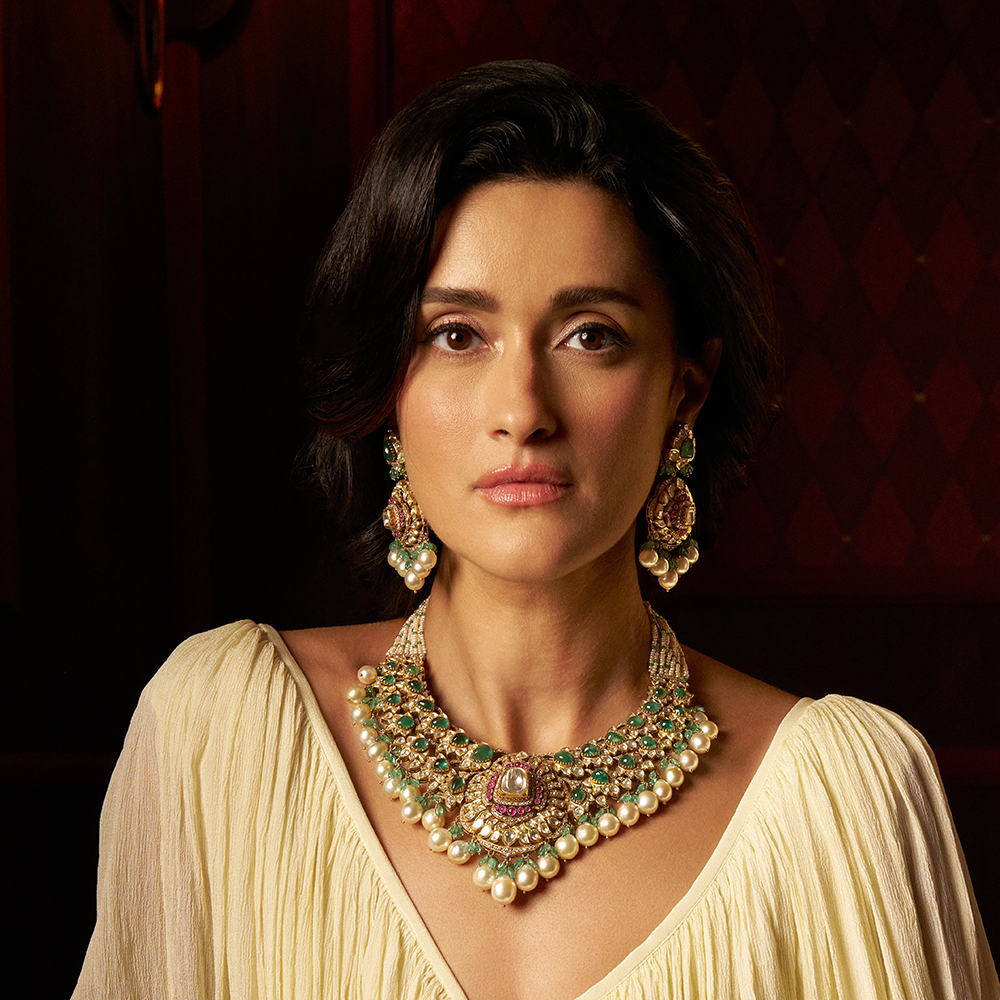
For brides who want to see how the uncut-diamond aesthetic translates across necklace sets and bridal pieces, Talwarsons' Polki collection offers examples of the form. The deeper technical comparison of grading, care, and how to choose between them belongs in our dedicated Kundan and Polki bridal guide.
Rings: The Piece You'll Wear Every Day

Every other piece in this guide comes off at the end of the function. The ring stays on, which makes it the one bridal purchase where durability matters as much as design. It is also the piece most likely to be resized or reset later, so how it is built counts as much as how it looks.
Most Indian brides end up with at least two: the engagement or roka ring, chosen to photograph well up close, and the band exchanged at the ceremony. They share a finger, so design them together rather than discovering the clash later.
How the Stone Is Held
The setting is the whole metal mounting, but the decisions that affect durability happen at the head, where the stone sits.
|
Setting |
How it works |
Suits |
Trade-off |
|
Prong |
Metal strips bend over the stone's edge, usually four or six |
Maximum light and visibility |
Tips can snag; need checking and occasional re-tipping |
|
Bezel |
A metal rim wraps the stone's girdle, full or partial |
Daily wear, hands-on work, softer stones |
Covers more of the stone, lets in slightly less light |
|
Channel |
Stones sit in a groove between two metal walls |
Bands and accent stones |
Difficult to resize |
|
Flush |
The stone sits level with the surface of the band |
Wide bands; hard use |
Least light of all |
|
Tension |
Pressure between the band's open ends holds the stone |
Hard stones; a floating, modern look |
A hard blow can shift it; often impossible to resize |
Prong shape matters more than buyers expect. V-shaped prongs wrap and protect pointed corners, which is why heart, princess, pear, and marquise stones need them; those points are exactly where chipping starts.
How the Stones Are Arranged
-
Solitaire: one centre stone, minimal decoration. The most versatile, and the easiest to pair with a band.
-
Halo accent stones ringing the centre, which adds sparkle and makes the centre read larger. More small stones means more upkeep.
-
Three-stone centre flanked by two side stones, traditionally past, present and future. A natural place to bring in emerald or ruby.
-
Pavé: small stones set close along the band for a continuous surface of sparkle.
-
Cluster: small stones grouped to read as one larger design, often floral. Visual presence at a lower price than a single big stone.
Coloured Stones and Polki in Rings
Everything in the gemstone sections applies with more force here, because a ring takes far more knocks than a necklace.
-
Sapphire and ruby (Mohs 9) are the practical choice for a coloured centre stone worn daily: hard, tough, and with no cleavage.
-
Emerald is hard but brittle and almost always fracture-filled. Better as an occasional piece, and if it goes in a ring, give it a bezel or a low, sturdy mount.
-
Pearl and coral belong in occasion rings only, in protective settings. Daily wear will abrade them.
-
Polki and Kundan rings are held with lac and gold foil rather than prongs, a setting not designed for the stress a ring takes. Treat one as a function piece.
A few rules that decide the rest. Match the setting to your life, not the photograph: bezel, channel, flush, and low solitaires suit active hands, while high cathedral settings and delicate pavé reward a gentler routine. Ask about resizing before you order, not after: prong solitaires and full bezels adjust cleanly; channel and pavé bands do not, and ring size changes with weather, weight, and age. Expect 18K or 14K rather than 22K on a stone-set ring: the added alloy is what holds the stone securely, as explained in the gold section above. And budget for upkeep, since prongs wear and stones loosen; warm water, mild soap, and a soft brush are the home routine, with a jeweller's check every couple of years.
Gold: Reading the Hallmark Before You Read the Price Tag
Traditional Indian bridal jewellery is built on gold, and here India gives buyers a genuine advantage many don't use: a legally mandated purity certification you can verify yourself in under a minute.
Since June 2021, hallmarking has been made mandatory for gold jewellery in India by the Bureau of Indian Standards (BIS), the country's only authorised hallmarking agency, and coverage has expanded in phases, reaching 392 districts as of August 2026. A current hallmark has three parts stamped together:
-
The BIS logo, a small triangle.
-
The purity grade, for example 22K916, 18K750, or 14K585.
-
The HUID is a six-character alphanumeric code unique to that one piece, registered in the BIS database.
The purity numbers are worth memorising, because they translate directly into what you're buying:
|
Stamp |
Karat |
Gold content |
Where it's typically used in bridal |
|
916 |
22K |
91.6% pure |
Traditional gold sets, chokers, temple jewellery |
|
750 |
18K |
75% pure |
Diamond and Polki settings are harder, better for holding stones |
|
585 |
14K |
58.5% pure |
Lighter, more durable pieces and everyday-crossover jewellery |
|
375 |
9K |
37.5% pure |
Budget-friendly accessories, lightweight gifting pieces and daily-wear items; rarely the main bridal set |
Notice the pattern: higher purity is softer. That's why traditional bridal gold favours 22K for its richness and colour, while diamond and Polki pieces often use 18K or 14K. The added alloy makes the metal strong enough to hold stones securely in prongs and settings. A jeweller quoting you 18K for a diamond piece isn't cutting corners; they're using the right metal for the job. (BIS states that mandatory hallmarking currently covers six karats: 14K, 18K, 20K, 22K, 23K, and 24K, with 9K available under the Indian Standard as a voluntary grade.)
The thirty-second check every buyer should do: download the official BIS CARE app, open "Verify HUID," and enter the six-digit code. The registered purity and details for that exact piece appear on screen. If a seller can't or won't show a HUID on a new plain-gold piece, treat it as a red flag, though, as the next section explains, several categories central to bridal buying are formally exempt. (Family jewellery bought before 2021 without a HUID is perfectly legal to own and sell; the requirement applies to what jewellers sell new.)
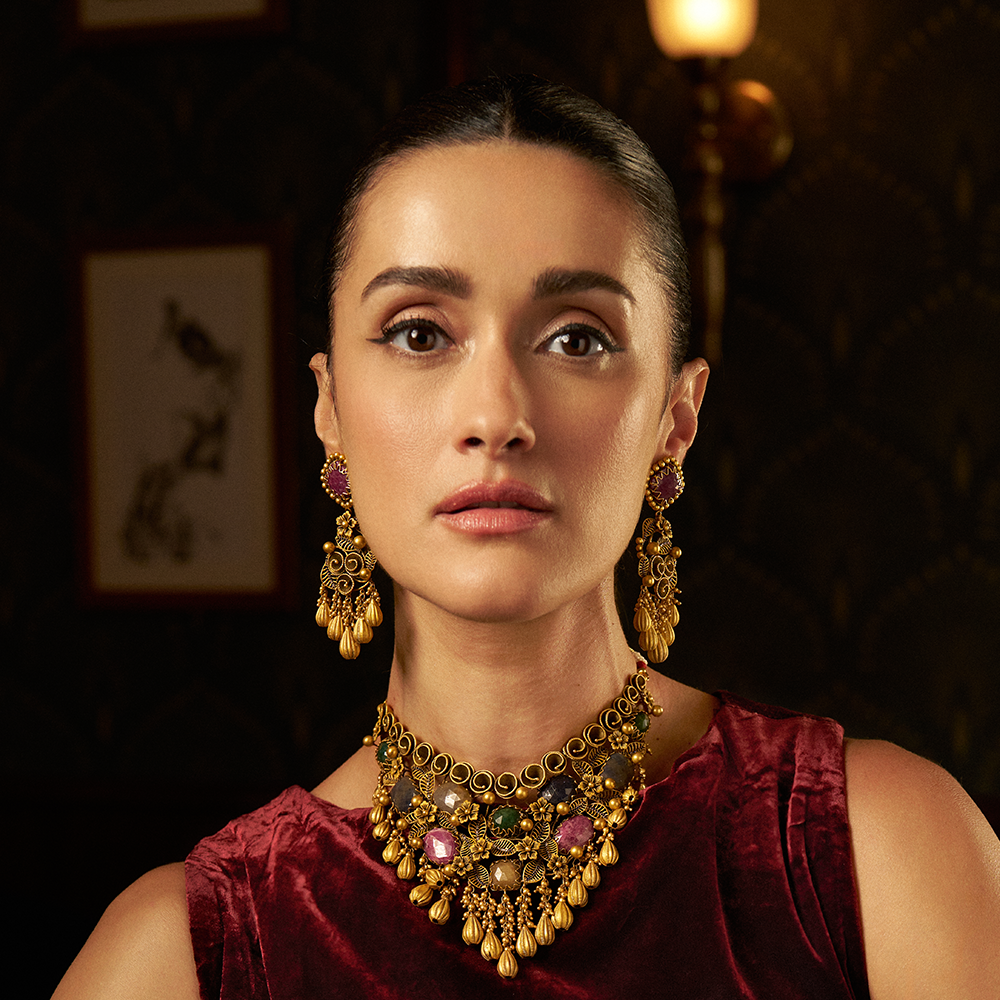
Talwarsons' gold collection, along with its temple jewellery and Meenakari pieces, shows how 22K and antique-gold work is used across bridal necklace sets, useful reference points for what traditional gold craftsmanship looks like at close range.
What the Hallmark Does Not Cover
This is the part of Indian hallmarking that bridal buyers are least often told, and it applies to precisely the jewellery this guide is about.
Under the Quality Control Order that governs mandatory hallmarking, a number of categories are exempt even inside notified districts. Among them:
-
Kundan, Polki and Jadau jewellery, named explicitly as special categories exempt from mandatory hallmarking
-
Any article weighing less than two grams
-
Jewellers with annual turnover up to ₹40 lakh
-
Articles meant for export, items for international and approved domestic B2B exhibitions, gold thread, gold bullion in any form, and articles not substantially complete.
There are two further limits worth knowing. Mandatory hallmarking applies only in notified districts; it is not nationwide, and the mandatory grades are the six caratages specified in the Indian Standard. And mentioning the HUID number on the invoice is currently voluntary for jewellers, so the code on the piece is the authoritative record, not the bill.
What this means in practice. A Polki or Kundan bridal set with no hallmark is not necessarily a warning sign; it may simply fall under a stated exemption. That removes one check, so the others matter more:
-
Ask whether the piece is hallmarked. Exempt does not mean prohibited; a jeweller may voluntarily hallmark exempt pieces, and many good ones do. A jeweller who chooses to hallmark Kundan or Polki work is giving you a verification route they did not have to.
-
Where a piece is not hallmarked, ask for the gold purity to be stated in writing on the invoice, and ask which caratage.
-
Ask for the itemised weight breakdown (gold, stones, lac and enamel) that this guide recommends elsewhere for exempt pieces; it is doing more work than usual, because there is no hallmark backing the purity claim.
-
Consider having the piece independently assayed. Any consumer can have the purity of hallmarked jewellery verified at a BIS-recognised Assaying and Hallmarking Centre.
Diamond Certification: How to Read a Grading Report

India gives gold buyers a legally mandated purity check. Diamonds have no equivalent legal mandate; there is no government stamp on a diamond, and no database a buyer can query by law. What exists instead is a voluntary system of laboratory grading reports, and knowing how it works is the difference between buying a documented stone and buying a description..
What a Grading Report Actually Is
A diamond grading report is an expert opinion on a specific stone, issued by an independent laboratory that has examined it under controlled conditions with standardised instruments. It is not a valuation, not a guarantee, and not a certificate of ownership; the trade calls it a "cert", but the document itself is a report, and reputable laboratories are careful about that distinction.
What it does is convert claims into checkable statements. "Top-quality VVS" from a salesperson is a sales line. The same words on a report from a recognised laboratory, tied to a stone with measurements that match the one in front of you, are something you can verify.
What's On It
A full natural-diamond grading report from a major laboratory typically records:
-
Shape and cutting style
-
Measurements in millimetres
-
Carat weight
-
Colour grade (D-to-Z, or a fancy-colour description)
-
Clarity grade (FL to I3)
-
Cut grade, for standard round brilliants
-
Polish and symmetry grades
-
Fluorescence
-
Proportions, usually as a diagram
-
A plotted diagram mapping the stone's individual clarity characteristics, effectively its fingerprint
-
Any detectable treatments
-
A unique report number
Shorter formats exist. GIA's Diamond Dossier, for natural diamonds between 0.15 and 1.99 carats, carries the full 4Cs results but no plotted diagram. GIA also issues online-only reports, and a Diamond Origin Report that additionally identifies a stone's country of origin, with the report number laser-inscribed on the girdle.
For coloured stones, the emeralds, rubies and sapphires in the sections above, the relevant document is an identification report rather than a grading report. It states what the gemstone is, whether it is natural or synthetic, describes detectable treatments, and records cut, shape, weight, measurements and colour. An identification and origin report adds an informed opinion on geographical origin. For pearls, laboratories issue identification and classification reports covering origin (natural or cultured), mollusc and environment where determinable, treatments, and quality against the pearl value factors.
How to Verify a Report Yourself
The check takes about a minute, and buyers rarely do it.
-
Find the report number on the document.
-
Open the issuing laboratory's own verification tool GIA Report Check, IGI's report verification, and equivalent services at other laboratories. Navigate there directly; don't follow a link supplied with the stone.
-
Compare every field on screen against the paper. Carat weight, measurements, colour, clarity, cut. A report that exists but describes a different stone is as much a problem as no report at all.
-
Check the girdle inscription under 10x magnification where the stone is inscribed, and confirm the number matches.
-
Match the report to the stone in your hand, not just to the paperwork. Measurements and the plotted diagram are what tie a document to one specific diamond.
If a stone is already mounted, a full re-grade isn't possible without unsetting it, which is one argument for buying a certified loose stone and then having it set.
Lab-Grown Diamonds Are Documented Differently Now
As covered above, the certification of lab-grown diamonds changed materially on 1 October 2025, when GIA stopped applying the 4Cs to them and moved to a two-tier descriptive assessment, Premium or Standard, based on an overall review of colour, clarity and cut, with stones below the threshold receiving no descriptor. GIA's stated reasoning is that most lab-grown diamonds fall into a very narrow band of colour and clarity, making the nomenclature developed for natural diamonds a poor fit for a manufactured product.
IGI continues to issue full 4Cs reports for lab-grown diamonds, as do HRD Antwerp and GCAL. Every lab-grown diamond evaluated by GIA is laser-inscribed with "Laboratory-Grown" and a GIA assessment number, so the stone itself is permanently identified.
For a buyer, this means three things: a GIA report and an IGI report on comparable lab-grown stones will now look completely different; a "Premium" descriptor does not map onto any specific old letter grade; and if you want a documented colour and clarity grade on a lab-grown stone in writing, you need a laboratory that still issues one.
Certification Versus Hallmarking: Two Different Things
These are routinely conflated at the counter, and they answer different questions
|
BIS hallmarking |
Diamond grading report |
|
|
What it covers |
The precious metal only; the purity of the gold |
The stone only: identity, quality, treatments |
|
Who issues it |
The Bureau of Indian Standards, India's only authorised hallmarking agency |
Independent gemological laboratories |
|
Legal status |
Legally mandated for gold jewellery in notified districts, with exemptions |
Voluntary everywhere |
|
Where it lives |
Stamped on the piece itself |
A separate document, plus an optional laser inscription on the stone |
|
How you check it |
Verify HUID in the BIS CARE app |
The issuing laboratory's own report-check tool |
|
What it does not tell you |
Nothing about the stones a hallmarked piece can hold, glass |
Nothing about the metal it is set in |
A hallmarked gold ring with an uncertified stone is half-documented. So is a certified diamond in unhallmarked gold. For a piece that carries both, ask for both and note that the hallmark relates only to the net weight of precious metal in the piece, not to its total weight including stones.
Beyond Diamonds: Coloured Stones and Navratan
Bridal jewellery in North India isn't only gold and diamonds. Emeralds, rubies, sapphires and pearls appear constantly in traditional sets, usually alongside Polki or Kundan work, and they do practical work for a bride: they inject the reds and greens that carry a classic bridal palette, and they let a set read as traditional without relying on diamonds alone.
One format deserves its own explanation, because it is the most misunderstood thing a bride is likely to be offered. Navratna means "nine gems" in Sanskrit, and it refers to a specific set of nine stones, each traditionally linked to one of the nine celestial influences of Vedic astrology, the Navagraha. Worn together, they are believed to balance those influences, which is why navratna pieces are considered auspicious regardless of a wearer's individual chart.
Two points before the list. First, the astrological associations below are described as tradition, not as fact; they explain why a jeweller arranges the stones the way they do, and they are the reason navratna pieces are commissioned, but they are beliefs rather than gemological properties. Second, and more usefully for a buyer: the nine stones are wildly different materials. They range from the hardest substance used in jewellery to one of the softest, which has real consequences for how a navratna piece must be built and cared for.
The Traditional Arrangement
The nine stones are not scattered at random. Convention places the ruby at the centre, representing the Sun, with the remaining eight around it clockwise from the top: diamond, pearl, red coral, hessonite, blue sapphire, cat's eye, yellow sapphire and emerald. Tradition holds that only a ruby (or a red spinel) belongs in the centre, mirroring the Sun's position at the centre of the solar system.
Regional variations exist, and linear arrangements are used for bracelets and necklaces, but the sequence of the stones is normally preserved even when the geometry changes. If a jeweller proposes a navratna piece, ask which arrangement they are following and why.

Ruby (Manik): the Sun
What it is: The red variety of corundum, aluminium oxide coloured by chromium. Only red corundum may be called ruby; every other colour is a sapphire.
Colour: Pinkish-red through deep blood-red. Finer, more saturated reds command steep premiums.
Durability: Mohs 9, with excellent toughness and no cleavage, an outstanding jewellery stone, second only to diamond in hardness.
Ruby is one of the most heavily treated gems on the market. Heat treatment is routine and accepted. Lead-glass fracture filling is a different matter: these stones require far more care than untreated or heat-treated rubies, because the glass can be damaged by contact with everyday substances, including something as mild as lemon juice. Ask, in writing, which treatment applies.
Pearl (Moti): the Moon
What it is: An organic gem, formed of nacre layers of calcium carbonate bonded by conchiolin, grown inside a mollusc. Natural pearls form around an accidental irritant; cultured pearls form around a deliberately inserted bead or piece of tissue. Cultured pearls are real pearls, and the distinction must be disclosed.
Colour: White and cream are most familiar, but pearls occur across the full range of hues.
Durability: GIA ranks pearl at 2.5 on the Mohs scale, very soft, easily scratched and abraded. It is also sensitive to heat, chemicals, cosmetics, and perfume.
Pearls are not graded on the 4Cs. GIA classifies them on seven value factors: size, shape, colour, lustre, surface quality, nacre quality, and matching. Lustre and nacre quality are what separate a fine pearl from a dull one. Practical rule for a bride: pearl jewellery goes on last and comes off first.
Red Coral (Moonga): Mars
What it is: Another organic gem material, the calcium-carbonate skeleton of marine coral polyps, not a mineral crystal.
Colour: Orange-red through deep ox-blood red; tone and evenness drive value.
Durability: Mohs 3 to 4, soft and porous.
Coral is the most fragile link in most navratna pieces. It should be stored in its own pouch so harder stones cannot scratch it, kept away from chlorinated water, heat, cosmetics, and perfume, and never put through an ultrasonic or steam cleaner. Dyed coral can fade with prolonged sun exposure, so ask whether the colour is natural or enhanced.
Emerald (Panna): Mercury
What it is: The green variety of beryl, coloured by chromium and vanadium.
Colour: Bluish-green to pure green; saturation matters more than absolute depth of tone.
Durability: Mohs 7.5 to 8, but hardness is misleading here. Emeralds are typically full of inclusions and fissures, which makes them comparatively brittle.
This is the stone where treatment disclosure matters most. Estimates suggest 90 per cent or more of emeralds on the market are fracture-filled with oils or resins to improve apparent clarity. The practice is centuries old and accepted, but the filling is not permanent, and the degree of filling significantly affects price. Never clean an emerald ultrasonically or with steam; the vibration can extend existing fractures and the heat can sweat the filler out. Warm water, mild soap, and a soft brush are the entire routine.
Yellow Sapphire (Pukhraj): Jupiter
What it is: Yellow corundum, the same mineral as ruby and blue sapphire, coloured differently.
Colour: Pale lemon through rich golden yellow. In the Indian market, this is one of the most in-demand single stones, which also makes it one of the most imitated.
Durability: Mohs 9, excellent toughness, no cleavage. Suited to daily wear, including rings
Because demand is astrological rather than fashion-led, yellow sapphire trades at prices that reward substitution with treated or synthetic material. Corundum has been synthesised for over a century, and lab-grown stones are physically identical to the eye. An identification report from a recognised laboratory confirming natural origin and stating detectable treatments is not optional on a stone like this.
Diamond (Heera): Venus
What it is: Crystalline carbon, the hardest natural material used in jewellery.
Colour: In the normal range, colourless (D) to light yellow, brown or grey (Z). See the 4Cs section below for how this is graded.
Durability: Mohs 10, many times harder than corundum, despite being only one number above it on a scale that is not evenly spaced.
In a navratna piece, the diamond is usually small, and buyers rarely ask for its grading. That is reasonable for a melee-sized stone, but it also means the diamond is where a piece's quality quietly varies. Ask what the stone is: natural, lab-grown, or a simulant such as cubic zirconia. All three exist in navratna settings, and the price difference is enormous.
Blue Sapphire (Neelam): Saturn
What it is: Blue corundum, coloured principally by iron and titanium.
Colour: Pale cornflower to deep velvety blue. Origin affects price sharply: Kashmir material commands the highest premium, with Burma, Sri Lanka and Madagascar also producing fine stones.
Durability: Mohs 9, excellent toughness, no cleavage.
Untreated sapphires are worth substantially more than treated ones, and origin claims carry real money, so both belong on a laboratory report rather than in conversation. Glass filling occurs in sapphire too, though far less commonly than in ruby.
Hessonite (Gomed): Rahu
What it is: The orange-to-brown variety of grossular garnet, a calcium-aluminium silicate. It is sometimes called the cinnamon stone.
Colour: Pale yellow-orange through honey and cinnamon to deep brownish-red.
Durability: Roughly 7 on the Mohs scale, grossular garnet is generally cited in the 6.5 to 7.5 range. It has no cleavage, which helps, but it is softer than corundum and benefits from a protective setting in a ring.
Hessonite has a diagnostic internal look: a roiled, swirling turbulence caused by its inclusions, often described as a heat-haze or a "whisky in water" effect. Unusually, this is not a defect: inclusions are expected in hessonite and, unless they threaten the stone's structure, do not generally depress value. A hessonite that looks flawless and glassy is worth a second look.
Cat's Eye Chrysoberyl (Lehsunia): Ketu
What it is: Chrysoberyl, a beryllium aluminium oxide, that displays chatoyancy, a sharp band of light that glides across the stone as it moves. The effect comes from dense parallel needle-like inclusions reflecting light, and it only appears when the stone is cut as a cabochon oriented to those fibres.
Colour: Honey yellow, greenish, brown and grey, with the finest examples showing a crisp, mobile "eye"
Durability: Mohs 8.5, placing it just behind ruby and sapphire and making it genuinely hard-wearing.
Chrysoberyl is the benchmark for this effect. In gem trade usage, "cat's eye" with no qualifying species name means chrysoberyl; every other chatoyant stone must be named cat's eye tourmaline, cat's eye quartz, and so on. If a seller says only "cat's eye", confirm the species in writing, because cheaper chatoyant materials are frequently sold under the bare term.
What This Means When You Actually Buy a Navratna Piece
Look again at the hardness range: diamond at 10, corundum at 9, chrysoberyl at 8.5, emerald at 7.5 to 8, hessonite around 7, coral at 3 to 4, pearl at 2.5. No other category of jewellery routinely combines materials this far apart, and it creates four practical consequences.
-
The setting has to do unequal work. The soft stones pearl and coral especially need protective, recessed or bezel-style mounting. A good navratna piece is designed around its weakest stones, not its hardest.
-
Cleaning is governed by the most delicate stone. Because coral, pearl, and most emeralds cannot tolerate ultrasonic or steam cleaning, no navratna piece should ever go into one, whatever the other seven stones could withstand.
-
The diamond can scratch everything else in the box. Store the piece alone, in its own soft pouch.
-
Treatment disclosure matters across the whole piece, not one stone. Ask for a single itemised statement covering all nine: what each stone is, whether it is natural or synthetic, and what treatments are detectable.
For coloured-stone pieces, generally navratna or not, the buying questions shift away from the diamond framework. Instead of the 4Cs, ask three things: is the stone natural, treated, or synthetic; what specifically was done to it; and is there a report from a recognised laboratory saying so. Then check the metal's hallmark exactly as you would for plain gold.
Diamonds for the Reception: What the 4Cs Actually Tell You

Where the wedding ceremony leans traditional, the reception is where many brides choose diamonds, and diamond buying has its own framework: the 4Cs, standardised globally by the Gemological Institute of America (GIA):
Cut: the Only C That Is Made, Not Found
Cut is not shape. Oval, pear, and emerald describe a diamond's outline; cut describes the entire design of the stone, how its facets are arranged and proportioned, and therefore how it handles light. It is the only one of the four that reflects human craftsmanship rather than what the earth produced.
GIA assesses cut through three things a stone does face-up:
-
Brightness: the total internal and external reflection of white light.
-
Fire: the dispersion of light into spectral colours
-
Scintillation: the pattern of light and dark areas, and the sparkle as the stone moves
Alongside face-up appearance, GIA's system weighs design (weight ratio, meaning weight relative to diameter, and durability, meaning the risk inherent in the stone's proportions) and craftsmanship (polish, the condition of the facet surfaces, and symmetry, the exactness of facet shape and placement). The resulting grade runs from Excellent to Poor.
One thing buyers are rarely told at the counter: GIA issues cut grades only for standard round brilliant diamonds, because they are the only shape with standardised faceting. Every other shape marquise, emerald, pear, oval, heart, and the rest is a fancy shape, and a report for one will not carry a cut grade. If a salesperson quotes you an "Excellent cut" on a pear, ask which laboratory issued it and on what basis.
For reference, a standard round brilliant has 57 or 58 facets; the large flat facet on top is the table, and the 58th, when present, is the tiny culet at the bottom of the pavilion.
Colour: Grading the Absence of Colour
When jewellers talk about diamond colour in the normal range, they are really measuring how little colour a stone has. GIA introduced the D-to-Z scale in 1953 and deliberately began at D, avoiding the letters, numbers and loose terms used by earlier systems.
The scale runs from D (colourless) to Z (light yellow, light brown or light grey), with each letter representing a defined step. Colour is graded under controlled lighting against masterstones of established grade; it is a matter of method, not opinion, which is why a grade from a recognised laboratory means something and a verbal "top colour" does not.
The differences between adjacent grades are subtle, particularly once a stone is set, but they move price significantly. Two practical notes for bridal buying:
-
Yellow gold settings, which dominate Indian bridal work, are more forgiving of faint colour than white metal. A near-colourless stone that looks slightly warm against platinum can look perfectly white in 22K or 18K yellow gold.
-
In a three-stone or halo design, keep the accent stones close in colour to the centre. Noticeably whiter side stones make the centre stone look yellower by comparison; noticeably warmer ones flatten the overall impression.
Anything outside the normal range of blue, pink, green, and strongly coloured yellows and browns beyond a Z masterstone is a fancy colour diamond, graded on a different system built around hue, tone and saturation, with terms such as Fancy Light, Fancy Intense and Fancy Vivid.
Clarity: What's Inside, and Whether It Matters
Diamonds form under extreme heat and pressure, and most carry what GIA calls birthmarks. Internal and surface-reaching features are inclusions; external features are blemishes. Clarity grading assesses them on five factors: number, size, relief, nature and position.
Every diamond is evaluated under 10x magnification, and GIA's standard is that clarity, polish and symmetry grades can only be finalised using a 10x loupe. The scale has 11 grades in six categories:
|
Category |
Grades |
What it means |
|
Flawless |
FL |
No inclusions and no blemishes visible |
|
Internally Flawless |
IF |
No inclusions visible; blemishes present |
|
Very, Very Slightly Included |
VVS1, VVS2 |
Inclusions so slight they are difficult even for a skilled grader |
|
Very Slightly Included |
VS1, VS2 |
Inclusions observed with effort; characterised as minor |
|
Slightly Included |
SI1, SI2 |
Inclusions are noticeable |
|
Included |
I1, I2, I3 |
Inclusions are obvious and may affect transparency, brilliance and durability |
The practical takeaway is that most diamonds in jewellery shops sit between VS and SI and that grading happens under magnification that no wedding guest will be using. Paying a premium to move from VS2 to VVS1 buys you a difference that is real on paper and invisible across a reception hall. Paying attention to the I grades, on the other hand, is worth it, because obvious inclusions there can affect durability, not just looks.
Carat: Weight, Not Size
A metric carat is defined as 200 milligrams, and each carat divides into 100 points. A 0.25-carat stone is a "twenty-five pointer"; anything above a carat is spoken in carats and decimals.
The word measures weight, and weight is not the same as the size you see face-up. Two stones of identical carat weight can look meaningfully different depending on how they are proportioned: a deep-cut stone carries weight below the girdle where nobody sees it, while a well-proportioned stone of the same weight spreads wider across the finger.
Two other things worth knowing before you compare quotes:
-
Magic sizes: Certain weights 1.00, 1.50, and 2.00 carats are treated as desirable thresholds. A 0.99-carat and a 1.00-carat stone are very hard to tell apart by eye, but the price difference can be significant. Buying just under a threshold is one of the few reliable ways to get more stone for the money.
-
Carat alone tells you nothing about quality: If two diamonds match on colour, clarity and cut, the heavier one is rarer and will cost more. But two stones of the same carat weight are not equivalent, and value reflects all four Cs.
If You Can Only Prioritise One, Prioritise Cut
A well-cut diamond with slightly lower colour or clarity will visibly outshine a larger, colourless but poorly cut stone. Cut governs the brightness, fire and scintillation that people actually notice; colour and clarity differences at the top of their scales are frequently invisible without a loupe.
One caveat specific to this guide: the 4Cs do not transfer to Polki. Polki is uncut diamond, judged on the clarity and lustre of the rough crystal rather than on facet proportions, and a Polki stone has no cut grade because it has not been cut. Applying 4Cs language to Polki or accepting it from a seller is a sign the vocabulary is being used for reassurance rather than accuracy.
After You Buy: Care, Insurance and Keeping Value
Bridal jewellery is often the most valuable thing a family owns, yet care and protection are the most neglected part of the purchase. A few principles hold across categories:
-
Store pieces separately: Diamonds are hard enough to scratch softer stones and gold; individual pouches prevent damage.
-
Polki and Kundan need gentler care: Because the stones are set with lac and gold foil rather than prongs, avoid soaking these pieces or exposing them to harsh chemicals and ultrasonic cleaners; the setting can loosen.
-
Keep your documentation: The BIS hallmark, any diamond certificate, and the itemised invoice are what establish value later, whether for resale, exchange, or insurance.
-
Ask about lifetime exchange and buy-back terms at the point of purchase, since these vary by jeweller and materially affect long-term value.
The Bridal Jewellery Checklist
Use this as a build order, not a shopping mandate; few brides need every line, and the ceremonial pieces (chooda, kaleere) are gifted rather than bought.
Foundation (decide first the wedding-day anchor)
-
[ ] Primary necklace set (choker or statement necklace + matching earrings)
-
[ ] Second necklace for layering (rani haar), if going for the classic long-and-short look
-
[ ] Maang tikka sized to your face and hairstyle
Completing the wedding look
-
[ ] Nath (nose ring), sized to the boldness of the overall look
-
[ ] Bangles / kada to complement the chooda
-
[ ] Ring(s)
Ceremonial (gifted, not purchased)
-
[ ] Chooda placed by maternal relatives
-
[ ] Kaleere tied by sisters and close friends
Other functions (build a lighter around the anchor)
-
[ ] Reception statement piece (often diamond or Polki)
-
[ ] Mehndi/sangeet light pieces (Meenakari, coloured stones, florals)
Before you pay, the verification checklist
-
[ ] BIS hallmark and HUID present on every gold piece (verify on the BIS CARE app)
-
[ ] Natural-diamond certification for any Polki or diamond piece
-
[ ] Itemised weight breakdown: gold vs. stones vs. lac/enamel
-
[ ] Clarity on the exchange, buy-back and making-charge terms
Where to See These Principles in Finished Pieces

Everything above is a way of judging jewellery, not a reason to buy from any one house. But it helps to see the distinctions on real pieces rather than on a chart; the difference between an uncut Polki diamond and a Kundan setting is far clearer in the hand than in a table. Talwarsons' collections are a useful reference point for that, because each maps directly onto a decision this guide covers:
-
Polki, seen up close: The Polki collection shows how uncut natural diamonds read across full necklace sets the soft, milky sparkle described earlier, and how it differs from the sharp shine of polished glass in a Kundan piece.
-
Traditional 22K and antique goldwork: The gold collection covers the 22K bridal sets and antique-gold chokers where purity and colour matter most, and where the hallmark check applies directly.
-
Temple and Meenakari craft: Temple jewellery and Meenakari pieces show two distinct traditions: deity-motif goldwork and coloured enamel that a bride might layer into the wedding-day look.
-
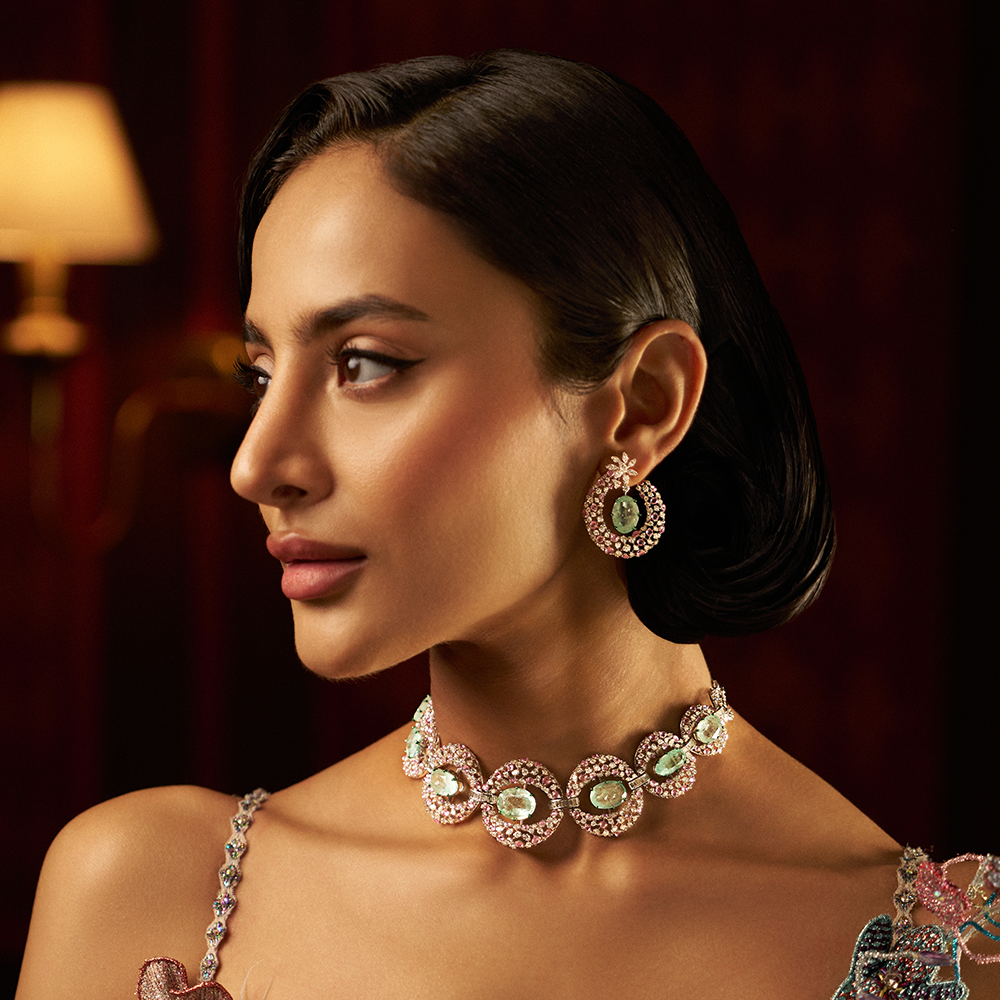
Coloured stones and navratan: The kundan-with-emerald and ruby sets, and navratan pieces, within the bridal collection illustrate how coloured stones sit against traditional gold, as discussed in the gemstones section.
-
Reception diamonds by cut and shape: The diamond collection combines brilliant-, pear-, and marquise-cut stones as a way to see how cut and shape behave in a finished setting rather than as 4Cs grades on paper.
-
Building a matched set: The necklace sets and full bridal collection are where the function-based build order and neckline logic come together across coordinated pieces.
Use these as worked examples of the principles above as a way to pressure-test what you've learned against real craftsmanship before you commit to anything.
The One Thing to Remember
Bridal jewellery buying feels overwhelming because it's usually framed as an aesthetic decision made under pressure. It's better understood as a sequence of clear decisions: plan by function, let your neckline choose your necklace, learn the Kundan–Polki–Jadau distinction so you pay for what you're actually getting, and verify purity and stones before you pay. Do those four things and the aesthetics take care of themselves because you'll be choosing from pieces you already know are honest.
Frequently Asked Questions
What is the difference between Kundan and Polki jewellery?
Polki is a natural diamond left uncut and unpolished. Kundan is a setting technique using refined gold foil, and in common usage, "Kundan jewellery" usually holds glass or semi-precious stones rather than diamonds. Because Polki contains real diamonds, it costs several times more than comparable Kundan and holds far higher heirloom value.
Is Jadau the same as Polki?
No. Jadau is the overarching craft, the Mughal-era technique of embedding stones into gold using lac resin and gold foil. Polki (uncut diamonds) and Kundan (glass or gemstones) are both set using Jadau. Polki is a stone; Jadau is a method.
How do I check if my bridal gold is genuine?
Look for the BIS hallmark: a triangular BIS logo, a purity grade (916 for 22K, 750 for 18K, 585 for 14K), and a six-digit alphanumeric HUID code. Enter the HUID in the official BIS CARE app to confirm the registered purity of that exact piece. Hallmarking is mandatory on new gold jewellery sold across most of India.
Which gold purity is best for bridal jewellery?
For traditional gold sets, 22K (916) is standard; it gives the rich colour Indian bridal jewellery is known for. For diamond and Polki pieces, 18K (750) or 14K (585) is often better, because the added alloy makes the metal strong enough to hold stones securely.
How do I match my necklace to my outfit?
Match it to your neckline, not just the colour. A high or closed neck suits a long necklace worn over the fabric or no necklace at all; an open or sweetheart neck suits a choker or short necklace; a deep V suits a graduated necklace or rani haar that follows the line. The necklace should fill the open space without overlapping the fabric.
Do I need a completely different set for the reception?
Most brides use a different look; the wedding ceremony leans traditional and full (gold, Polki, layered pieces), while the reception is often lighter and more contemporary, frequently featuring diamonds and a single strong statement piece rather than a full layered set.
Are lab-grown diamonds real diamonds?
Yes. Lab-grown diamonds are chemically and physically identical to natural diamonds. They typically cost less. Note that certification now differs: since October 2025, GIA describes lab-grown stones as "premium" or "standard" rather than grading them on the 4Cs, while IGI still issues full 4Cs reports for them and GIA keeps the 4Cs for natural diamonds.
When should I start buying bridal jewellery?
Begin researching 3–6 months before the wedding, especially for custom or Jadau/Polki work, which is hand-crafted and takes time. Decide the wedding-ceremony anchor set first, then build the lighter function looks around it.
What are the nine Navratna stones?
The nine are ruby, pearl, red coral, emerald, yellow sapphire, diamond, blue sapphire, hessonite garnet, and cat's eye chrysoberyl, each traditionally associated with one of the nine celestial influences of Vedic astrology. In the classic arrangement, the ruby sits at the centre, representing the Sun, with the other eight around it. Because the stones range from Mohs 10 (diamond) down to Mohs 2.5 (pearl), a navratna piece must be built and cleaned around its softest stone.
Does Polki jewellery need to be hallmarked in India?
No. Kundan, Polki and Jadau are named as special categories exempt from mandatory hallmarking under the BIS Quality Control Order, along with articles under two grams and jewellers with annual turnover up to ₹40 lakh. A jeweller may still choose to hallmark these pieces voluntarily, and many do. Where a piece is not hallmarked, ask for the gold purity in writing and for an itemised weight breakdown of gold, stones and lac.
What is a diamond certificate and do I need one?
A diamond grading report is an independent laboratory's opinion on a specific stone — its carat weight, colour, clarity, cut, proportions, treatments and unique clarity characteristics, tied to a report number. It is voluntary, unlike gold hallmarking, and it is the only way to verify a stone's quality claims. Verify any report on the issuing laboratory's own website using the report number, and check that the measurements match the stone in your hand.
Which of the 4Cs matters most?
Cut. It is the only C that reflects human craftsmanship rather than what the earth produced, and it governs the brightness, fire, and scintillation people actually notice. A well-cut diamond with slightly lower colour or clarity will visibly outshine a larger, colourless but poorly cut stone. Note that GIA issues cut grades only for standard round brilliants, since they are the only shape with standardised faceting.
What ring setting is best for everyday wear?
Bezel, channel, flush, and low-profile solitaire settings suit hands-on daily wear, because the stone sits low and there is little to snag. High cathedral settings, delicate pavé, and tension settings are better suited to lighter wear. Also ask about resizing before ordering: prong solitaires and full bezels resize most cleanly, while channel-set, bar-set, and pavé bands are harder to adjust, and tension settings can be impossible.
Should I pay gold rates on the full weight of a studded necklace?
No. The gold rate should apply to the net weight of precious metal, not the gross weight including stones. For hallmarked pieces, BIS requires the invoice to state the description of each article, the net weight of precious metal, the purity in carats and fineness, and the hallmarking charges. For Jadau, Polki, and Kundan work, also ask for the lac weight separately, since the resin has no intrinsic value.